
What is Eggshell Lacquer?
The Song Dynasty treatise Records of Pottery describes Ru ware porcelain as "a glaze luminous and clear, with patterns like cracking ice"—a reference to the natural crackle that emerged during firing due to the differing contraction rates of the body and glaze. This effect was praised as "a work of nature, beyond human art."
The art of eggshell lacquer represents a step further—an exploration that learns from nature, yet strives to elevate it. Unlike the spontaneous crackle of porcelain, eggshell lacquer involves artisans intentionally crushing eggshells and meticulously inlaying them according to the form of the object. This allows for precise control over the texture. The resulting patterns, set beneath a smooth glaze, appear profoundly deep, evoking the visual effect of "jade-like glaze with a luminous inner glow."Moreover, eggshell lacquer combines remarkable adaptability and lightness, allowing it to conform to various shapes while facilitating transport and display. It embodies both unique artistic expression and practical value.
Through this technique, the timeless elegance of Song porcelain is reborn in a contemporary form—not merely as the preservation of a craft, but as an aesthetic dialogue and technical innovation across time and space.


From Fragments to Treasures
Eggshell, one of the most common natural materials in life, is carefully selected, broken, and inlaid by artisans based on years of skill and patience into an artpiece. The texture resembles the natural crackle glaze of porcelain–crafted by human hands yet appearing as if formed by nature, glowing softly like jade.
Its wonder lies not only in transforming an ordinary material into museum–worthy art but also in revealing how true beauty often emerges from the simplest moments of daily life.
One Craft, Seven Steps, Dozens of Hands.
A SHANG XIA eggshell lacquer piece undergoes seven meticulous manual processes—primer application, inlaying, coloring, sanding, color correction, water polishing, and buffing. Carried out by experienced artisans working in harmony, the final work achieves a perfect integration of body and glaze, with natural crackling patterns and a mirror-smooth surface.
1. Primer Application
The primer is brushed onto the body to ensure durability and shape retention. SHANG XIA uses a natural adhesive extracted from cashew nutshell liquid as the primer material. It offers strong adhesion and provides excellent protection. Its chemical-free nature minimizes environmental impact from the source.


2. Inlaying
Selected duck eggshell fragments, uniform in texture and clean, are gently pressed onto the lacquered body by hand. By controlling the pressure and angle, the eggshells are guided to crack naturally into the desired shapes and sizes. Each fragment adheres seamlessly to the lacquer surface, fitting against its neighbors.


3. Coloring
Lacquer is applied to color the surface of the eggshells. Since the primer beneath the eggshells dries slowly, experienced artisans must work patiently to prevent the fragments from detaching before adhesion is fully secured.


4. Sanding
The surface lacquer over the eggshells is carefully sanded with water-soaked sandpaper to reveal the textured patterns. Through repeated and attentive grinding, the eggshell surface and surrounding lacquer are brought to an even greater level of smoothness and uniformity.

5. Color Correction
To ensure consistent color, clear texture, and orderly alignment of every eggshell fragment, artisans meticulously compare the work in progress with reference samples. Precise adjustments are made until the overall effect appears harmonious and naturally formed.

6. Water Polishing [1]and Buffing
Using sandpaper ranging from 3,000 grit[2] to 5,000 grit, the piece undergoes dozens of rounds of water polishing and buffing. This repeated refinement continues until the eggshell lacquer surface achieves a mirror-smooth finish and a richly layered textural effect.

[1] Water polishing refers to a process that uses water as a lubricant and cooling medium during sanding.
[2] 3,000 grit and 5,000 grit indicate the number of abrasive particles per unit area on the sandpaper. The higher the grit number, the finer the particles and the shallower the sanding marks.
Stunning Beauty: Eggshell Lacquer in London

Eggshell Lacquer and Black Walnut Square Carrying Box
The green edition was collected permanently by the Victoria & Albert Museum in 2020

Eggshell Lacquer and Black Walnut Round Carrying Box
The white edition was collected by the British Museum in 2025
Projected to be exhibited within the Museum's Chinese Gallery from December, 2025
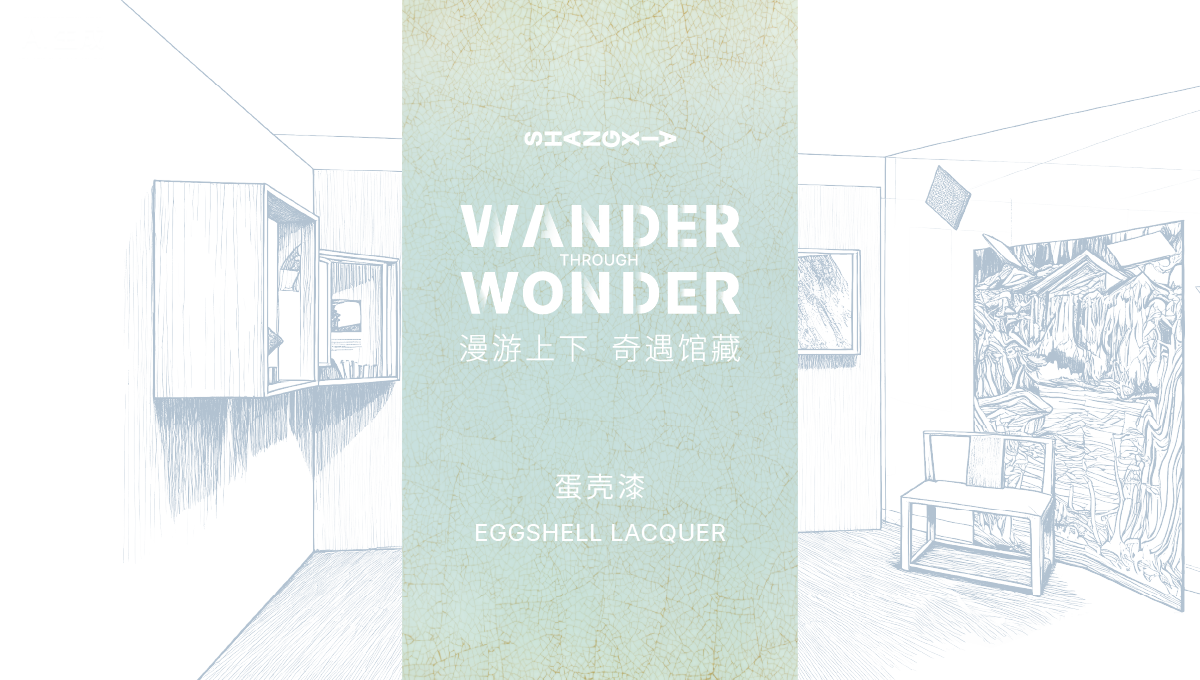
From Fragments to Treasures
Hands-on touch, fingertips aglow—witness how ordinary eggshells bloom into a landscape of crackled patterns. At SHANG XIA, experience the aesthetic miracle born from everyday objects.
Learn More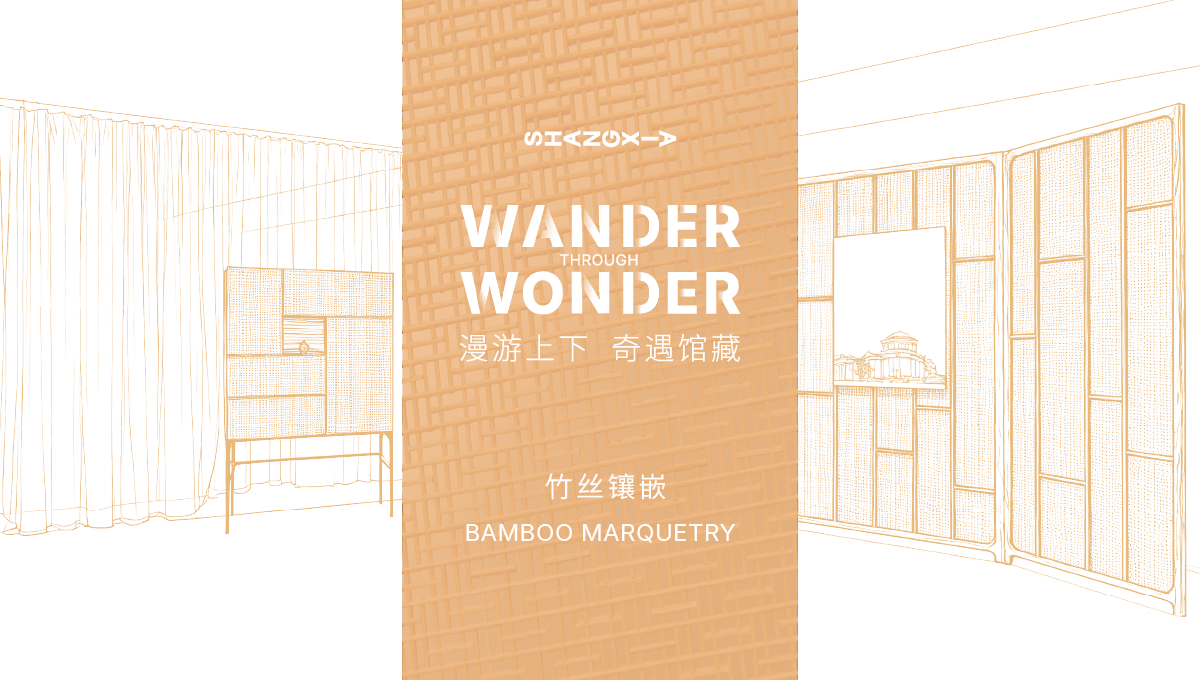
Inlayed into Beams of Light
A Qing Dynasty courtly craft, enduring and ever-renewed. With tweezers as the brush, short bamboo strands become strokes of ink. Patiently inlaid, piece by piece, they merge into form—continuing the luminous legacy of intangible cultural heritage.
探索更多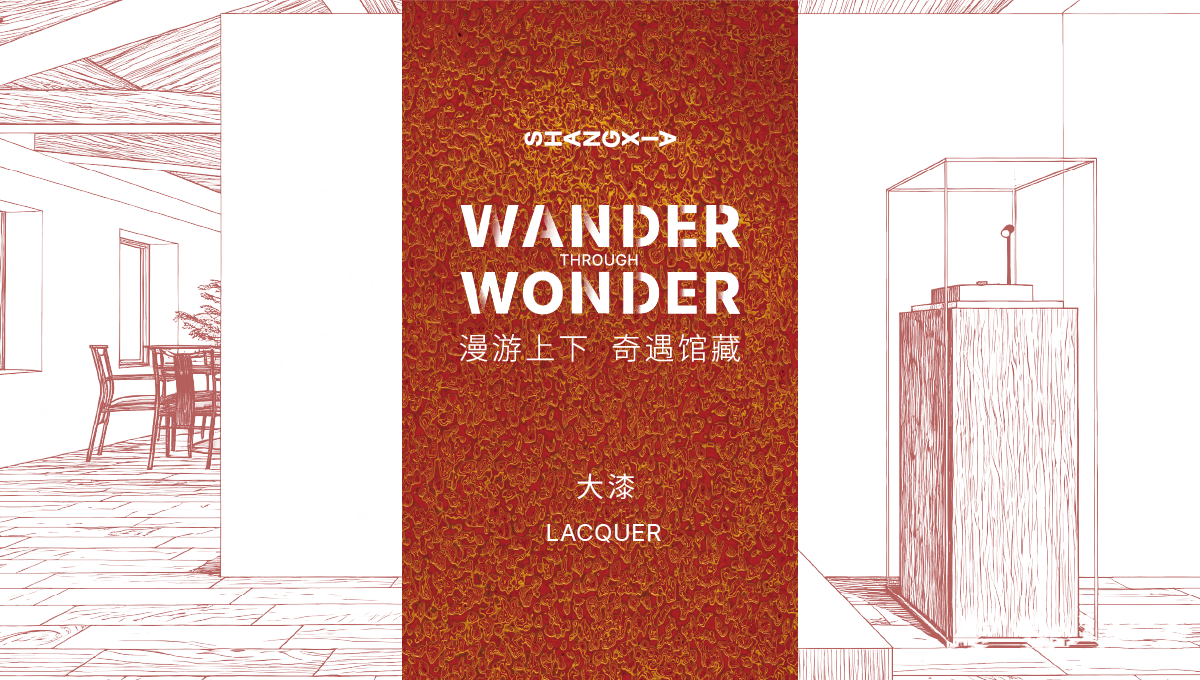
Layered Waves of Time
Having weathered rises and falls across millennia of history. Lacquer is an artistic collaboration between human hands and time. Awaiting collective polishing by many hands, uncover the brilliance sealed within its layered depths.
Learn More